DE
DE  Einfache Sprache
  High Contrast
 The Areal Nord —
where the future is taking shape
A new beacon is rising in northern Freiburg—figuratively speaking, of course, but with a radiance that aims to shine far beyond the Breisgau region. The project is as ambitious as it is forward-looking: it’s about nothing less than the industrial area of tomorrow.
The North Industrial Park, located right next to the Freiburg Trade Fair and the airport, appears at first glance to be a perfectly ordinary industrial and commercial site. In terms of structure, use, and diversity, it is in no way different from similar sites across the country. And yet it has one crucial distinctive feature: a brownfield site. A large brownfield site at that, which, at 21 hectares, offers enormous development potential.
Acquired in 1971 by Rhodiaceta as a reserve for potential expansion, little has happened on the site over the decades. This is essentially a stroke of luck—not only for Freiburg, but also for many other municipalities, to return to the concept of a “lighthouse project.” For the site offers the opportunity to rethink the very concept of an industrial zone and, above all, to bring that vision to life. In this way, the Areal Nord, as the former brownfield site is now called, becomes a proof-of-concept—that is, a prototype that demonstrates the feasibility of many innovative approaches. The site will differ from its immediate surroundings and set new standards. The focus is on climate adaptation, resource conservation, land efficiency, and community facilities.
But it is not just the region as a whole; each business location is also intended to serve as a model in its own right. Intuitive Surgical Deutschland GmbH is the first example of what this can look like. The U.S. manufacturer of remote surgical systems has established its European headquarters here, a five-story building that combines production, administration, development, and training. The building, designed to accommodate 600 employees, is complete and already in operation. Other innovative companies will be setting up shop here shortly, including measurement technology specialist Endress+Hauser and the Fraunhofer Society’s Ernst Mach Institute for Short-Time Dynamics. Multi-story building designs are the norm here; the “vertical factory” is becoming a reality. Intuitive Surgical demonstrates how this works with its production facility, which spans three floors.

Multifunctional, eco-friendly, and visionary: the mobility hub is the centerpiece of the shared infrastructure.
“We are delighted to have successfully attracted well-known companies from the life sciences sector. This confirms the appeal of our approach to sustainable and forward-looking site development, in which we make optimal use of the limited available space while maintaining high standards of quality.”
“We are delighted to have successfully attracted well-known companies from the life sciences sector. This confirms the appeal of our approach to sustainable and forward-looking site development, in which we make optimal use of the limited available space while maintaining high standards of quality.”
“We are delighted to have successfully attracted well-known companies from the life sciences sector. This confirms the appeal of our approach to sustainable and forward-looking site development, in which we make optimal use of the limited available space while maintaining high standards of quality.”
But first things first. In 2020, Freiburg-S-Wirtschaftsimmobilien GmbH & Co. KG (FWI) acquired the brownfield site from Cerdia Produktions GmbH and immediately began development.
Shortly thereafter, the Green Industry Park Freiburg initiative, together with FWI, brought together bright minds in an interdisciplinary think tank. The result: an innovative and attractive vision for the future that outlines key objectives for the site both in substance and visually. Developed in collaboration with key stakeholders, this vision—serving as a “light” master plan—became the starting point for an extraordinary development project.
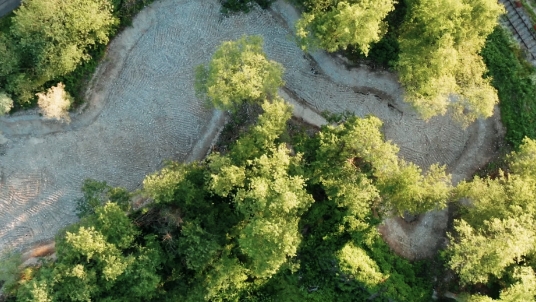
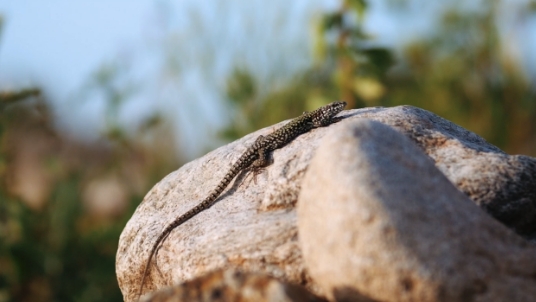
According to the plan, the site is to be gradually developed by 2030, primarily with new locations for a wide variety of manufacturing companies. Forecasts indicate that 2,000 people will then work here. Despite its industrial roots, the site will offer them a high quality of life in the open space. This means green areas with water features, places to linger and meet—whether for a break or an inspiring meeting. At the same time, natural structures will be integrated, as the zones are explicitly designed to contribute to biodiversity—that is, to become habitats for insects, birds, and reptiles. CEF compensation areas are part of this, as are infiltration zones for stormwater and an open flight corridor for bats.
These intentions alone illustrate the mindset behind the development—and also the differences from a traditional industrial area, where nature is present, if at all, only on the periphery. One might object that open spaces for nature and people are uneconomical because they occupy land that could otherwise be put to use. At first glance, this conclusion seems obvious, but in light of the dramatic changes at the ecological and climatic levels, it proves to be unsustainable. The solution lies in vertical densification. Thus, buildings with up to five stories will be constructed in the North Area. This may be a challenge, but the example of Intuitive Surgical shows that vertical organization is feasible in favor of minimal land use. The buildings themselves are to be constructed and operated as efficiently as possible; photovoltaic systems on the buildings are mandatory, as is connection to the local heating network, which is fed by waste heat from Cerdia’s production.
Of course, the planning also addresses mobility; after all, 2,000 people want to arrive at work every day safely, on time, and with as few emissions as possible. That is why an integrated concept is being developed that incorporates public transportation in the form of a new bus route and supports alternative mobility options such as car-sharing and Frelo bike rentals. At its core is the central mobility hub, featuring a shared parking garage, bus station, daycare center, and neighborhood store for employees. The mobility center is set to launch as early as the end of 2028 and prove that all companies can benefit from shared facilities. This is called cross-property thinking. In this spirit, space for startups is also planned—a kind of innovation hub for a wide variety of new ventures.
To ensure that all these individual elements come together to form a functional and harmonious whole, a thorough master plan for the available site is required, utilizing classic urban planning tools. This task was undertaken by the Freiburg-based architectural firm Sacker in collaboration with the landscape architects at freisign. Based on the initial concept study by the agency designconcepts, the firms formulated the master plan, which includes up to 14 building plots, access routes, communal areas, and open spaces. Incidentally, this is not a given for industrial areas either.
The concept behind the Areal Nord is thus innovative and forward-looking in many ways—a true flagship project that, according to the City of Freiburg, not only has a positive impact on the existing Areal Nord industrial area but also serves as a model for many other municipalities and, of course, businesses.